
Online

One of the most crucial steps in the evaluation procedure for engineers wishing to move to Australia via the skilled migration route is to prepare an effective Competency Demonstration Report (CDR). The Career Episode guide is generally the most difficult section of the CDR, as it asks engineers to act as presenters, technical experts, problem solvers, and personal contributors in an unambiguous and professional manner.
While many applicants have strong engineering skills, they have a hard time describing them in a Career Episode. It is important to write a good episode to avoid requests for clarification or even a failure to achieve a good assessment result.

A Career Episode is a career story that documents a particular time or project of an engineer’s academic or career experience. It illustrates the use of the applicant’s engineering knowledge and skills in the real world.
In general, engineers must create three Career Episodes, each for a different project, job or academic experience.
These episodes are not meant to just state what has occurred in a project, but to draw attention to:
The key is that the Career Episode should focus on how the applicant contributed to the project or achievement, rather than on the entire team or organization.
Career Episodes are a significant component of Engineers Australia’s competency assessment of an engineer.
Assessors will judge if applicants can prove they are able to:
Having strong Career Episodes can definitely make a difference to the overall quality of the CDR application and make it look great in the skills assessment linked to the successful outcome of the application.
The Engineers Australia-recommended Career Episode Writing Structure is one of the most critical tips in any Career Episode Writing Guide.
The introduction should include the background information of the project/activity such as:
This part should be short and typically one paragraph long.
The Background section provides an overview of the general background and project goals.
Include information such as:
This section assists the assessor in grasping the situation prior to considering your contribution.
This is the most significant part and usually will constitute most of the Career Episode.
It should explain:
The emphasis shall be on one’s own assignments and obligations.
The concluding part should conclude:
A short ending leaves a favourable impression with assessors.
A very common error that engineers make is to write about achievements of the team as opposed to individual achievements of the engineer.
Try not to say things like:
Rather, employ first person, for example:
Engineers Australia is not interested in evaluating your organisation’s success, but your competencies.
It is important to make the right decisions when picking projects to build good Career Episodes.
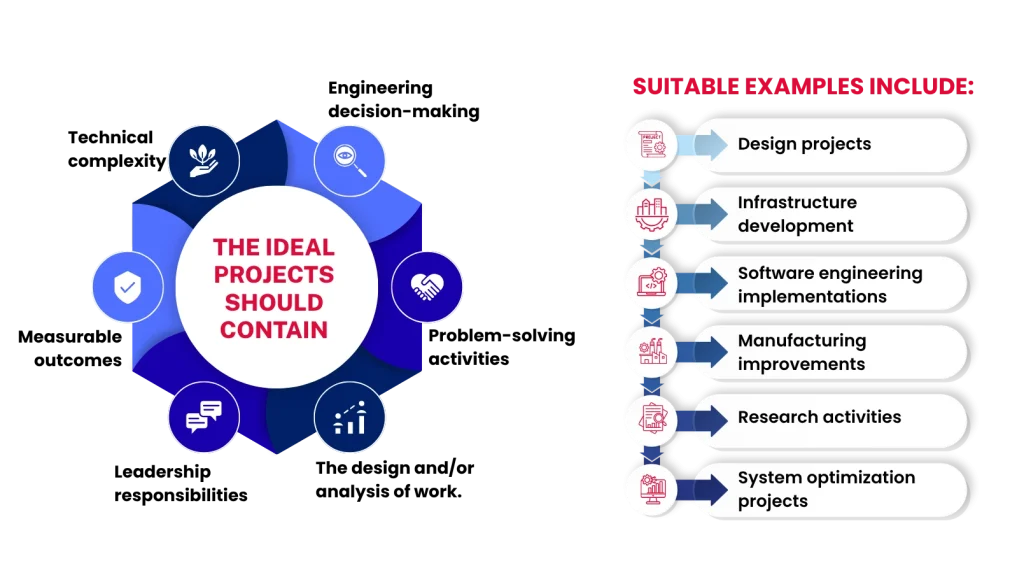
The ideal projects should contain:
Many projects that are less of a technical nature do not evidence the necessary skills.
Suitable examples include:
Career Episodes should focus on other competencies and experiences.
Keeping this document written in the first person is another key component of this Career Episode Writing Guide.
Use:
Avoid using:
First-person writing explicitly conveys your responsibility for engineering work, and makes it easier for the evaluators to determine what you are responsible for.
Engineers are not expected to give a summary of a project, but technical competency.
Include the following information:
For instance, a civil engineer could explain load calculations on structures and a software engineer could discuss the best ways to optimize a database or explain software architecture choices.
The technical level should be consistent with your nominated engineering job.
The core of Engineering is problem solving.
In your Career Episodes, you should make clear that you:
Assessors value candidates who have analytical thinking and decision-making skills.
Numbers make evidence and support your claims.
Examples include:
Quants are more convincing and professional because they are measurable.
Plagiarism is one of the biggest reasons for rejection of CDR.
Engineers Australia employs sophisticated plagiarism detection software to detect plagiarized content from:
Each Career Episode needs to be original and reflective of your own experience.
The Career Episode should be distinct between two engineers who worked together on the same project since their roles and contributions were different.
Career Episodes should be written in a professional and technical style.
Avoid:
Rather, use concise and informative engineering terminology, specific to your field.
Professional writing makes things easier to read and has a more impactful effect on assessors.
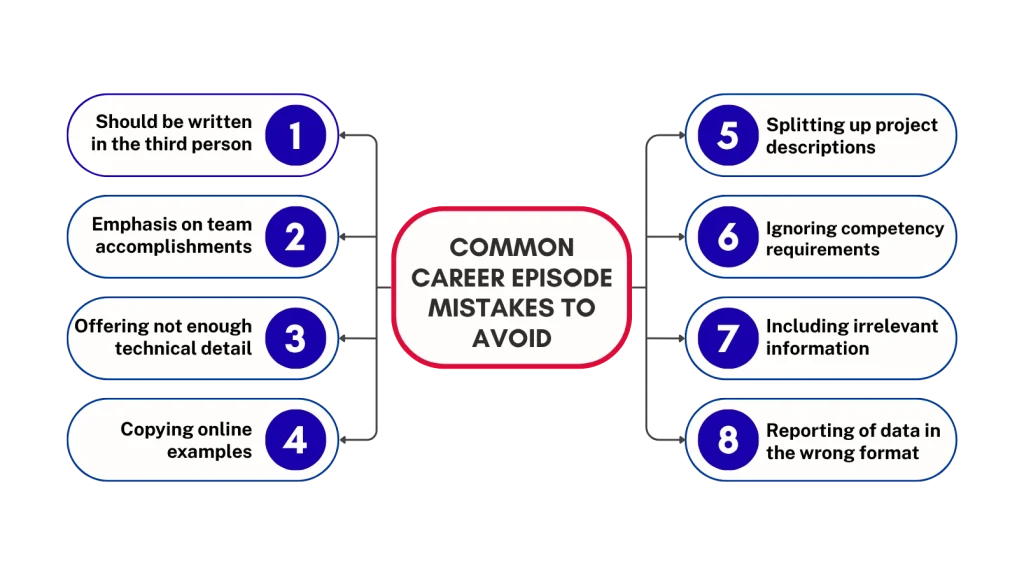
The list of common errors in preparation made by many engineers is quite long.
Common mistakes include:
By avoiding these pitfalls, you can markedly enhance assessments.
Presentation matters.
The following formatting suggestions to consider:
A well-organized report is more easily reviewed and is more professional.
Technical reports are written by many engineers but don’t include competency requirements.
When creating Career Episodes, take into account whether you have shown the ability to:
These elements balance to make Career Episodes more effective.
It is not just engineering skills that are required.
Where applicable, discuss:
Leadership experience can enhance the competency profile.


CDR reports, resumes, VETASSESS, and RPL applications can be challenging to prepare. Our team of professionals has effectively helped clients obtain approval with professional services that address all of these needs.
There are several situations in which engineers may choose to get professional advice when creating Career Episodes, especially if:
Professional review services will be able to provide a helping hand in structuring, clarity, and compliance as well as ensure content reflects the applicant’s experience.
The technical content, however, and engineering activities should always be based upon the engineer’s own experience and work history.
Career Episodes must be more than a description of a project. Engineers will need to communicate in a detailed and well-structured way, and exhibit technical competence, analytical thinking, and professional judgment.
Using this Career Episode Writing Guide, engineers can structure their skills presentation more effectively and enhance the likelihood of a successful outcome for the engineer for their skills assessment.
It all hinges on focusing on individual contributions, offering valuable technical information, showcasing problem-solving skills, and being original in the document.
Career Episode is more than a demonstration of meeting the assessment criteria; it is an opportunity to highlight the engineering knowledge and professional skills that will help applicants become an asset to the engineering profession in Australia.
Get a free consultation today. Our engineers will assess your profile and tell you exactly what you need — at no cost, no commitment.
Expert CDR, ACS, and VETASSESS assessment writing service. 5,600+ documents written. 99% approval rate. Serving professionals from 65+ countries migrating to Australia. Free consultation available.
Disclaimer:
CDR Writers is an independent document preparation service. Not affiliated with EA, ACS, VETASSESS, IML, or any official authority.
Sun-Fri · 24 Hours a Day
Copyright © 2020 – 2026 CDR Writers
99% Success | Trusted in 65+ Countries | 4.9/5 Rated | 100% Secure Payments
