
Online

Successfully passing a skills assessment is a primary requirement in the migration pathway for skilled workers who wish to migrate to Australia. If your occupation is assessed by VETASSESS, knowing the VETASSESS processing time of your occupation can assist you to plan your documents, visa application, and prevent unnecessary delays.
The essential criteria to consider when applying for an assessment are important, but the timeframe to wait for the result of the assessment is equally crucial. As visas and assessment outcomes are subject to variability from year to year, delays in assessment can affect both visa invitations and employer sponsorship opportunities, as well as migration planning schedules.

VETASSESS is one of the largest skills assessment bodies in Australia and is responsible for assessing many professional, managerial, trade and non-trade occupations, including under the Australian migration program.
The organisation assesses whether the applicant’s skills and work experience are suitable for an occupation nominated for this course in the Australian standard. To enable visa applications to be made under a range of skilled migration pathways, a positive assessment will be issued.
VETASSESS assessments are used by professionals in various industries, such as:
While occupations assessed by Engineers Australia may be different from those assessed by VETASSESS, both bodies have an important role in maintaining the integrity of the skilled migration system and the Engineering Profession in Australia by helping to ensure that qualified international professionals are also competent in Australia.
VETASSESS Processing Time is an average time and will be dependent on the type of Assessment Service chosen and the complexity of the application.
Common processing times are:
Assessment Type | Estimated Processing Time |
Standard Assessment | 10 to 15 weeks |
Priority Processing | 10 to 15 business days after allocation |
Trade Occupation Assessment | 8 to 12 weeks |
Professional Occupation Assessment | 10 to 15 weeks |
Reassessment Applications | 6 to 8 weeks |
Average processing times and may vary with the volume of applications and seasonality.
Applicants are advised to always include extra processing time for document verification, requests for further documentation, and administrative processing.
Lots of candidates think that the assessment timeframe stays the same for the entire year. In fact there are a number of factors that affect the workload of assessment authorities.
Some times when the volume of applications tends to be greater are:
As application volumes grow, so do the number of people waiting in assessment queues and the wait for assessment.
Planning for migration should include keeping track of processing updates and applying in advance of dates of intended visa lodgement.
Each application is different, and there are a number of factors that may affect the time it takes to assess an application.
One of the most frequent reasons for delays is incomplete applications.
Documents may be missing, such as:
Should further information be requested, VETASSESS will inform the applicant and the evaluation process will be suspended until all information is submitted and considered.
VETASSESS attaches a high importance to substantiating employment claims.
Assessors may verify:
Assessment periods can be extended in verification checks with past employers and/or international organisations.
There are occupations where more detailed assessments are required than others.
In managerial and very specialised occupations, for instance, assessors are likely to examine:
For complex occupations, longer review periods than typical professional occupations.
If you have qualifications from several countries, you might have to complete extra documentation to verify your qualifications.
Assessment officers should be prepared to:
This can extend the overall assessment periods by a couple of weeks.
One of the most significant documents in a VETASSESS application is employment references.
References must contain the following information:
The use of general or abstract words can lead to follow-up questions.
VETASSESS provides priority processing of eligible applications.
Priority applications are usually processed quicker than normal applications by an assessor, which means that waiting times are significantly shortened.
It may be advantageous for applicants who:
Priority processing does not mean that documents will be approved or waived.
Applicants with incomplete applications may still suffer delays even when their applications are prioritized.
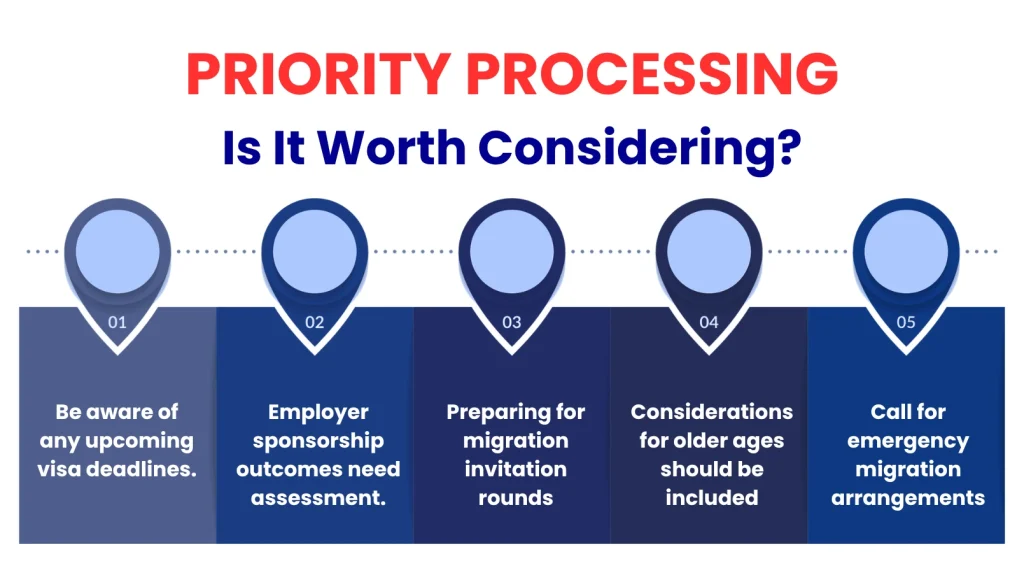
Applicants with incomplete applications may still suffer delays even when their applications are prioritized.
If an applicant is familiar with the most common delay factors, they can take potentially avoidable steps to this end.
Employment letters that don’t contain the necessary information typically result in clarifications.
A job description that is verbatim from an online source or from an occupation description from ANZSCO can raise concerns about authenticity.
The documents shall be certified if they are not in English.
If the translations are of poor quality, they may have to be reassessed.
Differences between:
Can result in further verification process.
If a verification is not received from an employer, assessment officers may ask the applicant for more information.
While it is impossible to influence the processing of assessment queues, there are many ways that applicants can make the process more efficient by making proper preparations.
Make a checklist – include:
It will minimize the risk of disruption in the assessment process if all documents are submitted at once.
Employment references should be:- honest, credible, and reliable
Good marks can make an important contribution to the efficiency of assessment.
Different occupations have different qualification and employment requirements.
The candidate should make sure that:
Misoccupations often lead to a re-evaluation or bad results.
Tell previous employers that it is possible for a verification request to be made by VETASSESS.
Having correct contact details can avoid unnecessary delays.
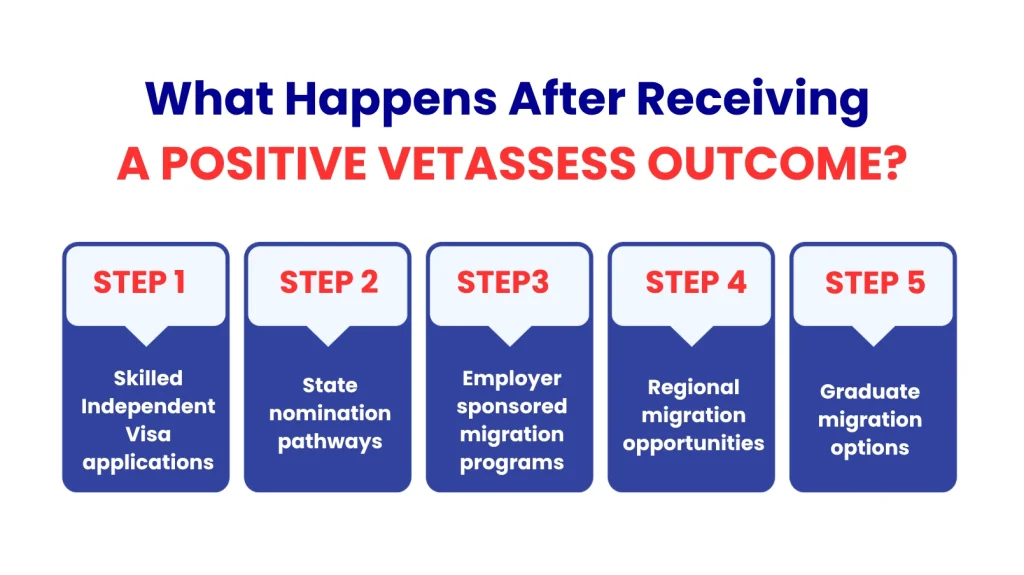
A positive assessment will unlock a number of Australian migration pathways.
Applicants will go forward with:
As many assessments are valid for a given period of time for migration, applicants should check the validity of their assessment result.
Keeping copies and records of all documents submitted is helpful when applying for or renewing a visa later.
While Engineers Australia is the more likely venue for engineers to complete assessments, knowledge of various skills assessment systems is useful.
Australia’s migration system is based on a number of assessing authorities to ensure professional standards across industries. These systems enable training for workforce quality and ensure the skills acquired by migrants are relevant to the expectations of industry in Australia.
The continuous demand in the Engineering Profession in Australia is clear proof to the country that they are serious about recruiting highly skilled people from other countries.
Engineering disciplines such as:
The infrastructure, construction, mining, energy and technology sectors continue to receive robust demand.
For those who are considering transitioning from a profession into a role in management, consulting, project administration or technical coordination, the VETASSESS requirements may eventually be seen depending on the nominated occupation.


CDR reports, resumes, VETASSESS, and RPL applications can be challenging to prepare. Our team of professionals has effectively helped clients obtain approval with professional services that address all of these needs.
A positive assessment will unlock a number of Australian migration pathways.
Applicants will go forward with:
As many assessments are valid for a given period of time for migration, applicants should check the validity of their assessment result.
Keeping copies and records of all documents submitted is helpful when applying for or renewing a visa later.
Any migration plans should include consideration of the time required to perform a skills assessment.
A realistic migration preparation schedule might look like:
Stage | Estimated Duration |
Document Collection | 2 to 6 weeks |
Skills Assessment Preparation | 2 to 4 weeks |
VETASSESS Assessment | 10 to 15 weeks |
English Language Testing | 1 to 4 weeks |
Expression of Interest Submission | Variable |
Visa Application Processing | Several months |
Those who start early are better able to organise their migration process with fewer last-minute hassles.
There are some simple documentation mistakes that can prevent an application from being approved or even submitted on time. There are a number of common documentation mistakes that can lead to unsuccessful or delayed applications, which are not necessarily related to eligibility.
Professional advice can help applicants with:
If you are spending time and money on your Australian visa applications, it’s sometimes easier to make a successful application in the first go than to deal with re-assessments later on.
As competition grows in skilled migration programs, appropriate preparation and realistic planning are critical to success.
Get a free consultation today. Our engineers will assess your profile and tell you exactly what you need — at no cost, no commitment.

Expert CDR, ACS, and VETASSESS assessment writing service. 5,600+ documents written. 99% approval rate. Serving professionals from 65+ countries migrating to Australia. Free consultation available.
Disclaimer:
CDR Writers is an independent document preparation service. Not affiliated with EA, ACS, VETASSESS, IML, or any official authority.
Sun-Fri · 24 Hours a Day
Copyright © 2020 – 2026 CDR Writers
99% Success | Trusted in 65+ Countries | 4.9/5 Rated | 100% Secure Payments
