
Online

In case you are an engineer, and you are planning to migrate to Australia, your Competency Demonstration Report (CDR) is the most significant document in your application. The Professional Engineer Summary Statement is one of its elements that is quite decisive since what it does is to directly compare your skills, knowledge, and experience with the competency standards as stipulated by Engineers Australia.
Most of the applicants underestimate its relevance and take it as a mere summary. In fact, it is an administrative cross-reference document that evidences how your career episodes make you fit the necessary competencies. It can either be approved or rejected, depending on how it is written.
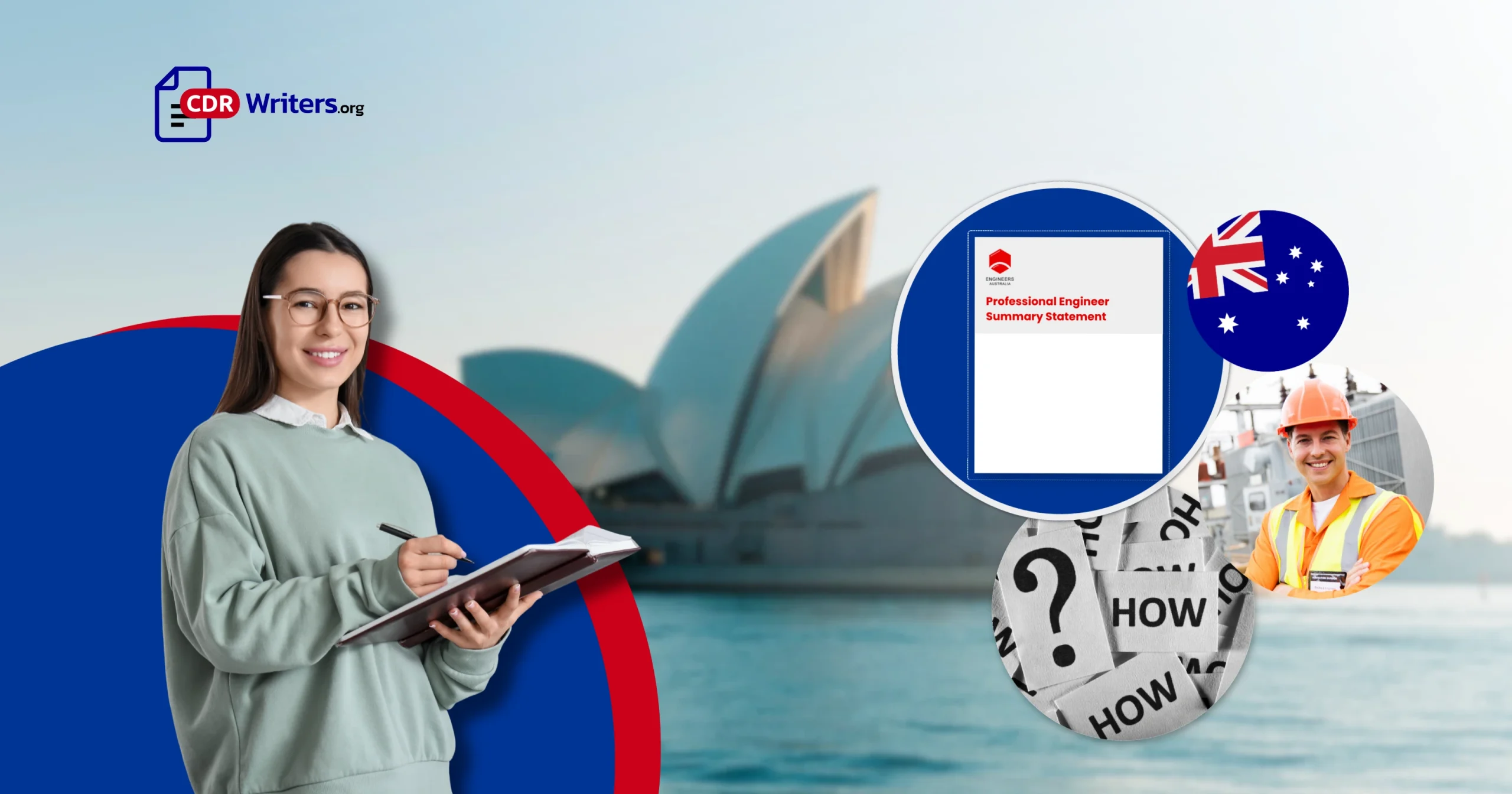
You can have a Professional engineer summary statement, which is a structured table or report linking particular paragraphs in your career episode to elements of competency defined by Engineers Australia. It serves as evidence mapping, which demonstrates to the assessors the precise points where they will find evidence of your engineering abilities.
Think of it as:
This part is critical and accurate in contrast to career episodes, which are much more narrative and descriptive.
Technically competent candidates do not fail due to poor experience, but they are not able to articulate their competencies. Assessors look at hundreds of reports, hence they use the summary statement to check quickly whether you qualify for the standards required.
Effective Professional Engineer Summary Statement:
In a word, this section is an evaluation of your experience in measurable terms.
Engineers under the Professional Engineer category should possess competencies that are under three large units:
This includes theoretical knowledge, engineering basis, and technical expertise.
This assesses your skills in engineering, problem-solving, solution design, and project implementation.
This measures communication skills, ethics, teamwork, leadership, and professional accountability.
Every unit has various elements of competency. All the elements should be included in your summary statement.
Your report must be written in the official format that is provided by Engineers Australia. It is usually provided in the form of a table, and the columns are:
Competency Element Brief description Career episode paragraph reference
Explanation of Each Column
Competency Element:
The code and title of the competency standards.
Brief Description:
A brief description of the way you exhibited this competency.
Paragraph Reference:
Specific paragraph markers of career episode evidence presentation.
Accuracy here is critical. It may result in rejection due to wrong references since assessors will not be able to confirm what you say.
Step 1: Understand the Competency Framework Thoroughly
Familiarise yourself with the official competency standards before you write. There are expectations involved with each of the elements, and you need to explain directly in relation to those expectations.
Trick: Underline keywords in each competency and make sure that you explain them in a natural way.
Step 2: Review Your Career Episodes
Read every career episode and check paragraphs that reflect specific competencies. One paragraph can contain several competencies, and one competency might be contained in several paragraphs.
Arrange references using color code or notes.
Step 3: Match Evidence With Competencies
For each competency element:
In case you fail to identify serious evidence of a competency, make adjustments to your career episode rather than coerce a frail clarification.
Step 4: Write Clear and Concise Descriptions
Your explanation should:
Weak Example:
I have worked on a project in which design upgrades have been performed.
Strong Example:
I restructured the circuit design to save 18 percent of energy, and this indicated that I was able to implement superior engineering design concepts.
Step 5: Maintain Logical Order
Use the same order of elements of competency as what is provided in the official guidelines. Do not put out of order or omit.
Assessors are expecting the standard format, and deviation can cause confusion.
Step 6: Double-Check Paragraph References
The most frequent causes of rejection are wrong references. Ensure:
Having a decade of experience reviewing winning CDR applications, the following are best-tested strategies that will always yield strong summary statements:
Use Action-Focused Language
Begin explanations with such verbs as:
This stresses your participation.
Keep It Evidence-Driven
Avoid vague statements like:
Instead, show proof:
I was in charge of a group of five engineers to do a structural analysis work two weeks earlier than expected.
Avoid Copy-Paste From Career Episodes
Findings of your career episode should be referred to, but not repeated, in your summary statement. Repeating is an indication of poor comprehension of the purpose of the document.
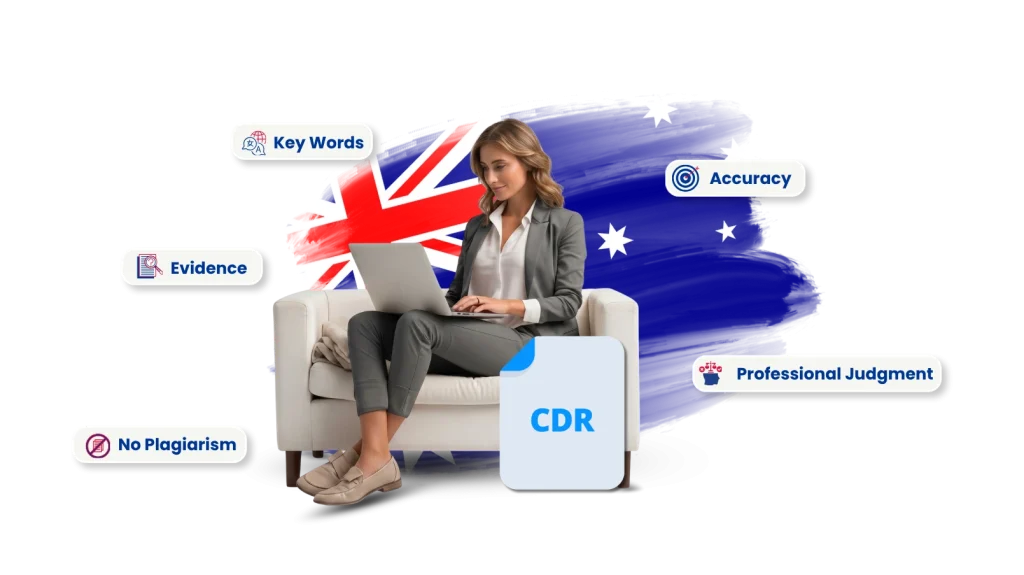
Maintain Technical Accuracy
Assessors are high-ranking engineers. They will notice technical inconsistencies easily. Always ensure:
Demonstrate Professional Judgment
Professional Engineers are supposed to take independent decisions. Circumstances in which you:
These mistakes are common to even experienced engineers:
Writing Generic Descriptions
Abstract statements do not show competence. Always make explanations person-centered, using concrete actions and outcomes.
Using Team-Focused Language
Excessive use of we conceals your personal input. Focus on “I”.
Ignoring Minor Competency Elements
Every element matters. Any absence of one may be rejected.
Overly Long Explanations
Keep descriptions concise. Assessors like to be clear and not to be long-winded.
Inconsistent Formatting
Professionalism is demonstrated in a professional presentation. Maintain uniformity in tables.
Competency Element:Implementation of system engineering synthesis and design activities.
Description: Developed a solar-based irrigation control system simulated with MATLAB to maximize energy saving and decrease operation cost.
Reference: Career Episode 2 -Paragraphs 18, 21, 24.
This example works since it is evident:
There are three things that assessors seek:
Clarity
Do you find it easy to comprehend your competency evidence?
Accuracy
Do you have any references to support your claims?
Completeness
Did you take care of all the elements of competency?
They never judge creativity; they judge competence.
HSBC Australia is aligned with internationally accepted competency standards pegged on models like the Washington Accord. This implies that your summary statement should be able to portray international professional engineer skills.
The reflection of your document should be:


CDR reports, resumes, VETASSESS, and RPL applications can be challenging to prepare. Our team of professionals has effectively helped clients obtain approval with professional services that address all of these needs.
Check this precipitator list against your summary statement:
When all boxes can be ticked, then you are assessment-ready in your document.
It is not necessary to restate your experience and write a strong Professional Engineer Summary Statement, but the competencies you demonstrate using organized evidence. It involves critical thinking, accuracy, and clarity of assessment criteria.
When properly incorporated it is the most influential part of your CDR as it leads assessors straight to the evidence of your abilities and their examination becomes easy.
Take time to learn about competency standards, evidence mapping, and summarizing your skills in a brief manner. A properly written summary statement does not merely help you in your application; it gives your application a serious boost.
Get a free consultation today. Our engineers will assess your profile and tell you exactly what you need — at no cost, no commitment.
Expert CDR, ACS, and VETASSESS assessment writing service. 5,600+ documents written. 99% approval rate. Serving professionals from 65+ countries migrating to Australia. Free consultation available.
Disclaimer:
CDR Writers is an independent document preparation service. Not affiliated with EA, ACS, VETASSESS, IML, or any official authority.
Sun-Fri · 24 Hours a Day
Copyright © 2020 – 2026 CDR Writers
99% Success | Trusted in 65+ Countries | 4.9/5 Rated | 100% Secure Payments
