
Online

Chartered Engineer Assessment process is important to understand if you are looking to pursue a successful career in engineering and/or relocate to Australia and other countries that accept engineering professional qualifications. The Chartered Engineer designation is a demonstration of your technical abilities, leadership, ethics, and commitment to lifelong learning.
The Chartered Engineer Assessment is valuable to both seasoned engineers seeking to confirm their skills and expertise, and engineering professionals aiming for career progression and enhancement.
We at CDR Writers help engineers to produce professional, relevant engineering statements, supporting documents, career episodes, and competency documents of a high standard that meet professional assessment requirements. Our engineering writers have the expertise to create documentation that is clear, professional, and adheres to assessment guidelines.

Chartered is internationally recognised and can offer increased levels of employment, income and professional credibility.
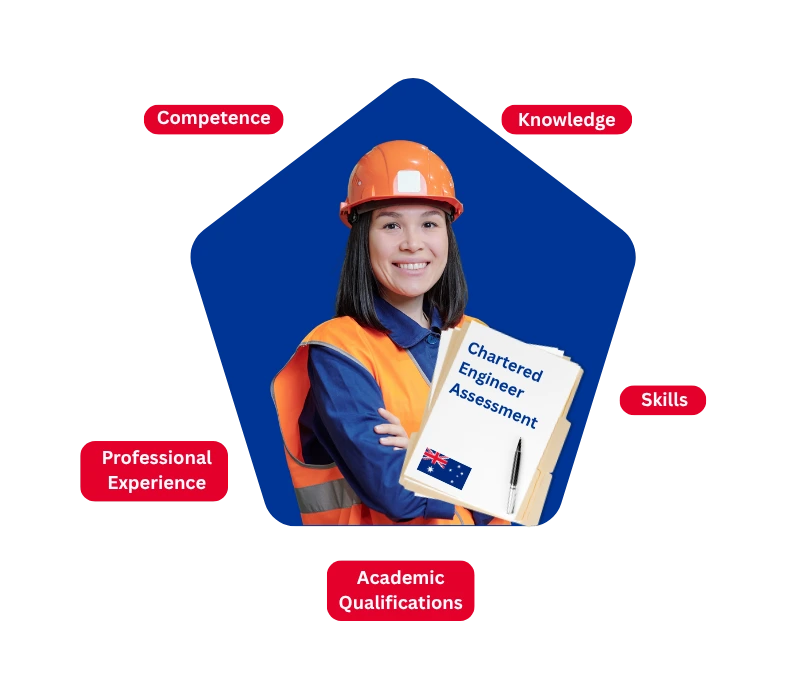
An engineering institution’s mechanism of assessing an engineer’s knowledge, skills, competence, and professional experience to establish that the engineer has the necessary skills to become a Chartered Engineer.
The assessment does not measure just the academic qualifications of an engineer but includes the ability to apply engineering principles to real-world projects, to solve complex engineering problems, deal with engineering risks, lead engineering teams, communicate effectively, and maintain engineering professional ethics.
In general, the assessment takes into account:
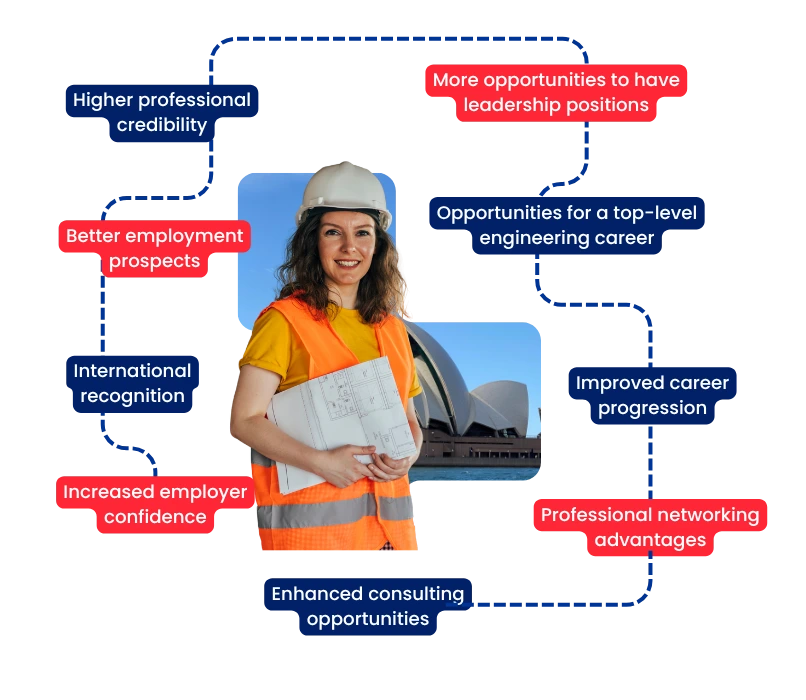
technical, project management, consulting or infrastructure employment.
Professional recognition provides much more than an additional title after your name.
A Chartered Engineer typically enjoys:
A number of employers explicitly ask for Chartered Engineers in positions of senior
Requirements differ between professional bodies, but most are in a number of competency areas.
Applicants should have a broad knowledge of engineering principles that are applicable to their discipline.
This includes:
One of the key assessment components is professional experience.
Assessors review:
Experience is more often than not as important as the quality of the experience.
Candidates need to have the skills to:
Senior engineers are expected to be able to manage people, projects, and resources for engineering.
Examples of leadership can be:
Engineers are expected to practice engineering in an ethical manner by professional institutions.
Assessment may consider:
Engineering is an ever-changing field.
Applicants are encouraged to show a demonstration of learning in the following ways:
Take our free Eligibility Test — answer 5 quick questions about your engineering background, qualifications, and visa goals. We’ll identify your assessment body, ANZSCO code, and the exact documents required. Takes under 3 minutes.
The assessment can be applied to engineers in all engineering fields such as:
The selection of locally hired and internationally trained engineers is possible as per the requirement of the respective engineering institution.
The main goal is to find out is an engineer is competent or not only through knowledge, but through his/her observations as well.
Most evaluators will judge your skills at:
Typically, applicants will create:
There may also be presentations or interviews for some professional bodies.
Competence in the following areas is generally expected:
Showing knowledge and use of advanced engineering practices.
Giving hands-on engineering solutions to problems.
Development of novel engineering systems that meet technical needs.
Knowledge of the identification, assessment, and control of engineering risks.
Efficiently managing engineering projects to fulfill quality, safety and cost goals.
Developing technical reports and effective communications with clients, contractors, and multi-disciplinary teams.
Taking technical decisions that are appropriate.
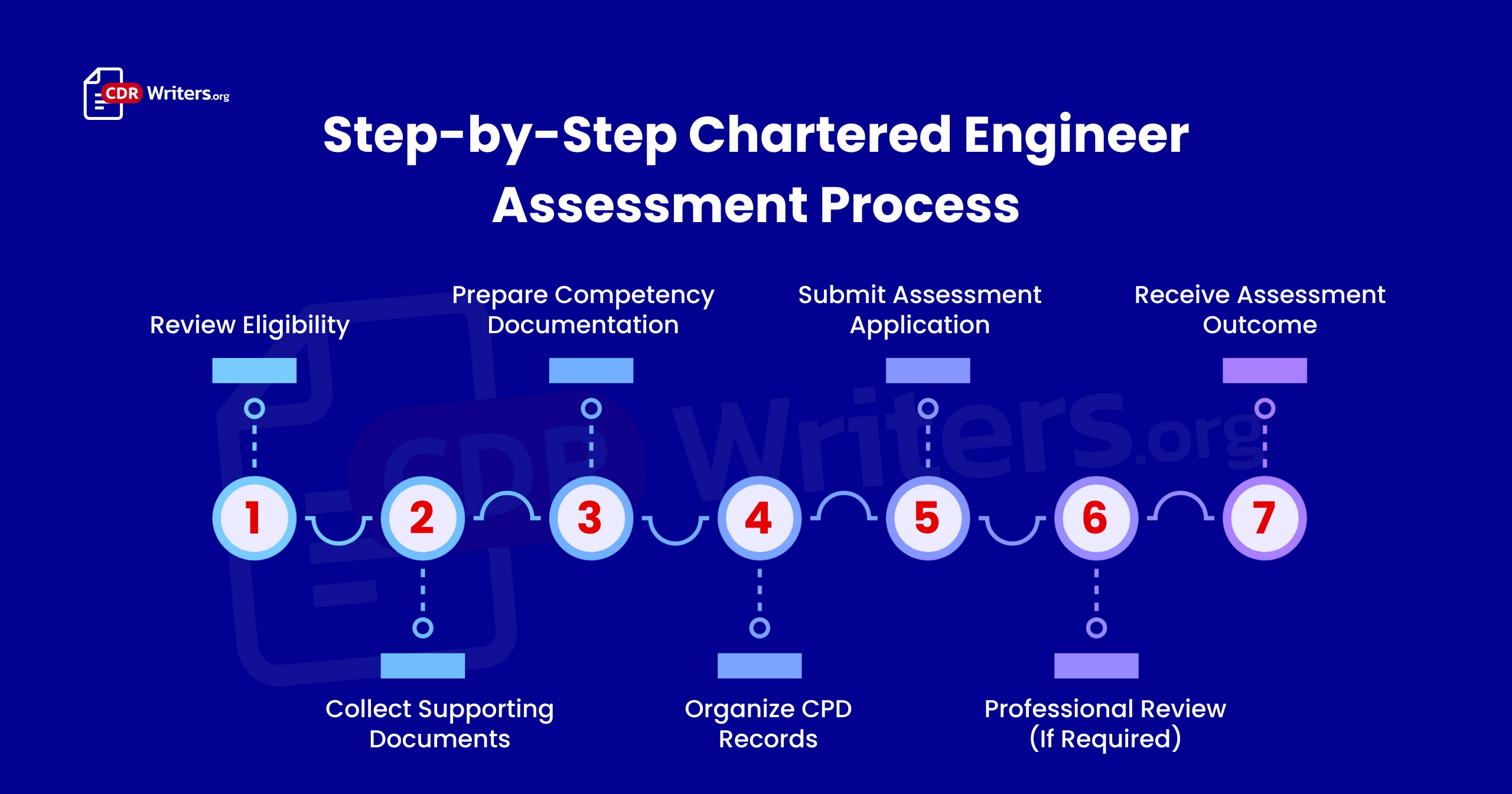
Ensure that your course and engineering work meet the requirements of the engineering institution you wish to attend.
Collect academic documents, work history, engineering project data, and professional development documentation.
Create competency statements with actual engineering examples to illustrate your technical skills and accomplishments.
Create comprehensive Continuing Professional Development records demonstrating commitment to continuous learning.
Fill out the assessment application and submit all necessary paperwork.
Interviews, presentations or competency discussions may be held at some institutions to confirm professional experience.
After evaluation, the institution informs the applicants about the results and any further requirements, if any.
There are many engineers whose expertise in technical skills is excellent, but their documentation is not.
Frequent issues include:
Well done if the documentation is carefully prepared; it contributes greatly to the overall quality of an application.
Technical writing skills and competency-based assessment understanding are necessary to prepare professional engineering documents.
Our experts help engineers by offering them:
Competency documents that are organized in a logical structure and reflect your engineering experiences.
Engineering assessment-oriented technical writing.
Professionally organized Continuing Professional Development records.
Technical strengths become the focus of engineering resumes that are made ATS-friendly. When it comes to engineering resumes made ATS-friendly, technical strengths are the focus.
Clear and technically correct engineering documentation for projects.
Thorough quality control for structure, grammar, technical presentation and uniformity.
Enhancement of existing assessment documents that are original.
One-to-one guidance throughout the documentation preparation process.
We take pride in quality, technical accuracy, and client satisfaction and attract thousands of engineering professionals who seek our help.
Our advantages include:
Understanding that each engineer’s career path is unique, each document is written based on a person’s own experience and not based on templates.


CDR reports, resumes, VETASSESS, and RPL applications can be challenging to prepare. Our team of professionals has effectively helped clients obtain approval with professional services that address all of these needs.
To help you be successful, consider these suggestions:
Earning the Chartered Engineer credential is an important milestone, and it demonstrates your knowledge, professionalism, and commitment to excellence in engineering. The well-prepared application will clearly show technical accomplishment and also exhibit your qualifications to fulfill the stringent requirements of professional engineering bodies.
We believe that CDR Writers exists to assist engineers in presenting their qualifications and experience in a clear, organized, and professional manner. A team that supports you in the assessment process – from competency documentation and CPD preparation through to enhancing your resumes and reviewing documents.
Move to the next step in becoming a professional engineer with confidence and the ability to showcase your engineering successes in the best light.
A Chartered Engineer Assessment is a professional assessment that is used to establish whether an engineer possesses the competencies, experience, technical knowledge, leadership and ethical practices necessary to be recognized as a Chartered Engineer.
Depending on the requirements of the engineering institution that is assessing them, engineers with a relevant academic background and adequate professional engineering experience may be eligible.
Yes. A major part of the assessment is generally professional engineering experience, which shows that one has engineering knowledge applied practically.
Academic certificates, evidence of employment, competency statements, CPD records, a professional resume, and supporting engineering documentation are most commonly required for most applications.
Not always. Other engineering institutions require a professional review interview or presentation, and others evaluate applications based mainly on documents submitted.
Get a free consultation today. Our engineers will assess your profile and tell you exactly what you need — at no cost, no commitment.
Expert CDR, ACS, and VETASSESS assessment writing service. 5,600+ documents written. 99% approval rate. Serving professionals from 65+ countries migrating to Australia. Free consultation available.
Disclaimer:
CDR Writers is an independent document preparation service. Not affiliated with EA, ACS, VETASSESS, IML, or any official authority.
Sun-Fri · 24 Hours a Day
Copyright © 2020 – 2026 CDR Writers
99% Success | Trusted in 65+ Countries | 4.9/5 Rated | 100% Secure Payments
