
Online

With an economy that is strong, growing infrastructure, technological advancements, and a demand for qualified technicians, Australia remains a popular destination for skilled engineers from all over the world. One of the most sought-after visas for migration for engineering professionals is the Subclass 189 Visa, which grants them permanent residence in Australia without employer, state or family sponsorship.
Knowing what it takes, who’s eligible, the points system and how to apply for the subclass 189 visa is the key to being an independent and flexible engineer.
Many engineering jobs are regularly on the skilled occupation lists as the shortage of engineers continues, which is ideal for engineers.

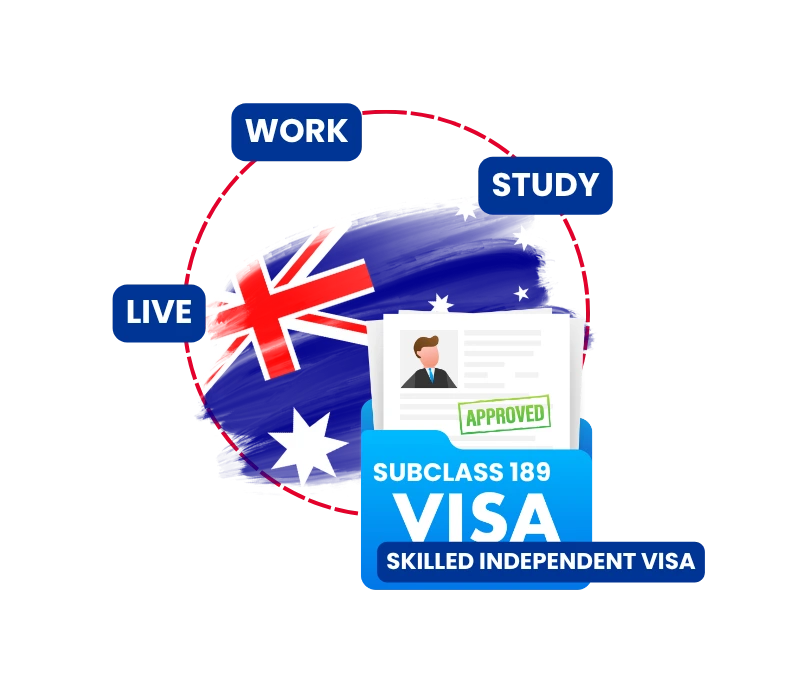
The Subclass 189 visa, also known as the Skilled Independent Visa, is a permanent skilled visa that is intended for highly skilled workers with occupations listed on Australia’s skilled occupation lists.
The Subclass 189 visa is not sponsored by an Australian employer or nominated by an Australian state or territory government, unlike other visas like employer-sponsored or state nominated visas. Successful applicants are eligible to be granted permanent visas to enable them to live, work and study in any location in Australia.
Many engineering jobs are regularly on the skilled occupation lists as the shortage of engineers continues, which is ideal for engineers.

looking to advance their careers in different sectors and across diverse geographical areas.
The Subclass 189 visa is frequently preferred by engineers due to its long-term security and freedom of choice that it provides, as opposed to the other migration options that are more temporary.
Some of the major advantages include:
This versatility can be particularly beneficial for engineering professionals
Once the subclass 189 visa is awarded, the visa holder can become a permanent citizen immediately. Engineers have the same employment rights as permanent residents in Australia and many social benefits available.
Visa holders are able to work for any employer, change jobs as they please, and even start up their own engineering consultancy/business.
Eligible family members can also be included in the visa application, and consequently, spouses and children can apply for permanent residency with the main applicant.
Successful applicants have access to Australia’s publicly-funded health care system, which greatly lowers health care costs.
There are many Australian schools that will offer domestic tuition fees to children who are enrolled in the application.
Once permanent residents meet the Australian Government’s residency criteria, they can become Australian citizens.
Take our free Eligibility Test — answer 5 quick questions about your engineering background, qualifications, and visa goals. We’ll identify your assessment body, ANZSCO code, and the exact documents required. Takes under 3 minutes.
Australia has a number of engineering occupations that regularly appear on the skilled migration list because of a shortage of skilled workers.
Skilled occupations include, but are not limited to, the following jobs in the engineering field:
It is important to note that occupation lists are subject to regular change, so engineers should check the status of their occupation before applying.
Applicants are ranked in the SkillSelect pool by the points-based system used by Australia’s migration program.
Age Group | Points |
18-24 years | 25 |
25-32 years | 30 |
33-39 years | 25 |
40-44 years | 15 |
People who are 25 to 32 years old will get a maximum of 25 points for age.
English Level | Points |
Competent English | 0 |
Proficient English | 10 |
Superior English | 20 |
Improving English proficiency is vital to making the profile of an engineer stronger.
Experience in engineering, both in Australia and overseas, may be used for valuable points towards eligibility.
Qualification | Points |
Doctorate | 20 |
Bachelor’s Degree | 15 |
Diploma or trade qualification | 10 |
The majority of engineering applicants meet the requirement for 15 points with their bachelor’s degree.
Engineers can earn additional points by:
Engineers need to meet a number of requirements to be eligible to apply for the Subclass 189 visa.
The age limit at the time of the invitation to apply is under 45 years.
Those who do not receive an invitation before they’re 45 years old are ineligible for this visa category.
Your occupation needs to be on the relevant skilled occupation list for Australia for the Skilled Independent Visa program.
Engineers have to have a positive skills assessment from the appropriate assessing authority.
Engineers Australia is the assessing authority for most engineering professions.
The skills assessment is designed to confirm that the skills and experience of the applicant is compliant with Australian requirements for the occupation they have applied for.
Applicants should be able to demonstrate competent English skills with the following language testing approved:
Points for Migration and a significant boost in invitation scores for higher English.
Applicants are required to meet the minimum of 65 points in the Australian skilled migration points test.
But because of the stiff competition from applicants, rounds of invitations may demand much higher scores.
Engineers Australia are a key player in the migration process for most engineering occupations.
Before submitting an Expression of Interest, engineers must obtain a successful migration skills assessment.
Engineers Australia assesses:
Applicants will be able to apply via:
For engineers who do not have qualifications accredited by international engineering agreements, many international engineers follow the pathway of the Competency Demonstration Report.
One of the most critical documents for engineers submitting to Engineers Australia is the Competency Demonstration Report, or CDR.
The report will showcase engineering knowledge, problem-solving skills, and professional competencies.
A typical CDR will contain:
Career Episodes are engineering projects or experiences in the profession, in which the applicant utilized an understanding and application of engineering concepts and technical skills.
The Summary Statement aligns the competencies identified in Career Episodes to Engineers Australia’s competency standards.
The CPD document emphasises learning activities and professional development carried out by the engineer.
A well-prepared CDR can go a long way to ensuring a positive skills assessment result.
Feature | Subclass 189 | Subclass 190 |
Permanent Residency | Yes | Yes |
State Nomination Required | No | Yes |
Employer Sponsorship Required | No | No |
Freedom to Live Anywhere | Yes | Limited Initially |
Additional Points from Nomination | No | Yes |
Engineers with lower points may choose to pursue the subclass 190 visa because of some extra points granted by the state nomination.
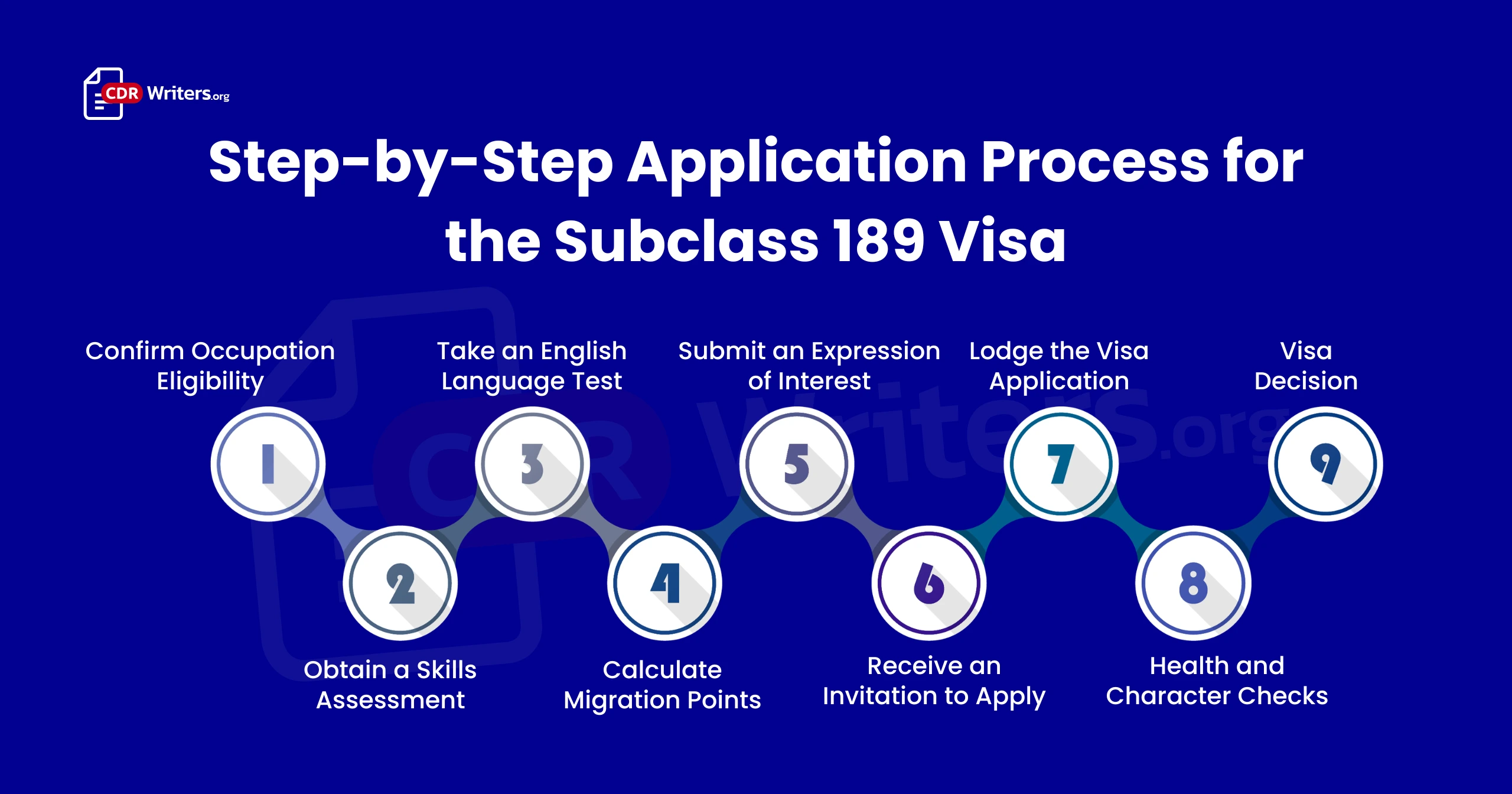
Step 1
Check that your engineering profession is in the list of currently valid skilled occupations.
Step 2
Provide the necessary documents to Engineers Australia and get a positive migration skills assessment.
Step 3
Pass the required English test and earn all the possible points.
Step 4
Estimate how many points you will require in invitation rounds.
Step 5
Submit an Expression of Interest (EoI) on Australia’s SkillSelect system. Submit an Expression of Interest (EoI) on the SkillSelect system in Australia.
This stage will not involve any visa fees, and it will just send the applicant to the invitation pool.
Step 6
The Australian Government may issue an invitation to candidates with competitive scores in invitation rounds.
Step 7
Only a certain number of days are available to submit a visa application following receipt of an invitation.
Step 8
The applicants and accompanying family members shall meet medical and police clearance.
Step 9
The final decision is taken by the Department of Home Affairs.
This does not imply an invitation to submit a tender.
The applicants are ranked on the basis of:
Engineers with higher scores are invited earlier than the engineers with lower scores.
The minimum requirement for engineers is 65 points, but the higher, the better, based on competition.
Typical scores for Competitive Invitations are:
The specific score needed varies according to engineering occupation and demand for migration at that time.
A lack of documentation or poorly prepared CDR reports can cause delays or failures.
There are a lot of engineers who struggle to make competitive scores in order to be invited.
Getting better English scores could be one of the most difficult components of the process.
It’s important to select the right occupation in the ANZSCO or it can have a negative impact on your skills assessment and visa applications.
The processing time can vary based on a number of factors, such as:
Completed applications that have good documentation tend to work more smoothly.


CDR reports, resumes, VETASSESS, and RPL applications can be challenging to prepare. Our team of professionals has effectively helped clients obtain approval with professional services that address all of these needs.
To boost their profile, engineers can:
Marginal gains in points can translate to a big score in the invitation round.
Migration is a complex process that consists of several stages such as:
By gaining the expertise of a professional, engineers can avoid expensive blunders and boost their success rates.
To be eligible, applicants need to accumulate a minimum of 65 migration points. The scores will be higher for invitations, which depend on demand and occupation.
No. There is no employer sponsorship or state nomination required to sponsor for the visa.
Yes. The Subclass 189 visa is granted permanent residency straight away upon visa approval.
Engineers Australia assesses almost all engineering occupations.
Not always. Engineers who have been qualified based on international qualifications may be qualified through other assessment routes.
Get a free consultation today. Our engineers will assess your profile and tell you exactly what you need — at no cost, no commitment.

Expert CDR, ACS, and VETASSESS assessment writing service. 5,600+ documents written. 99% approval rate. Serving professionals from 65+ countries migrating to Australia. Free consultation available.
Disclaimer:
CDR Writers is an independent document preparation service. Not affiliated with EA, ACS, VETASSESS, IML, or any official authority.
Sun-Fri · 24 Hours a Day
Copyright © 2020 – 2026 CDR Writers
99% Success | Trusted in 65+ Countries | 4.9/5 Rated | 100% Secure Payments
